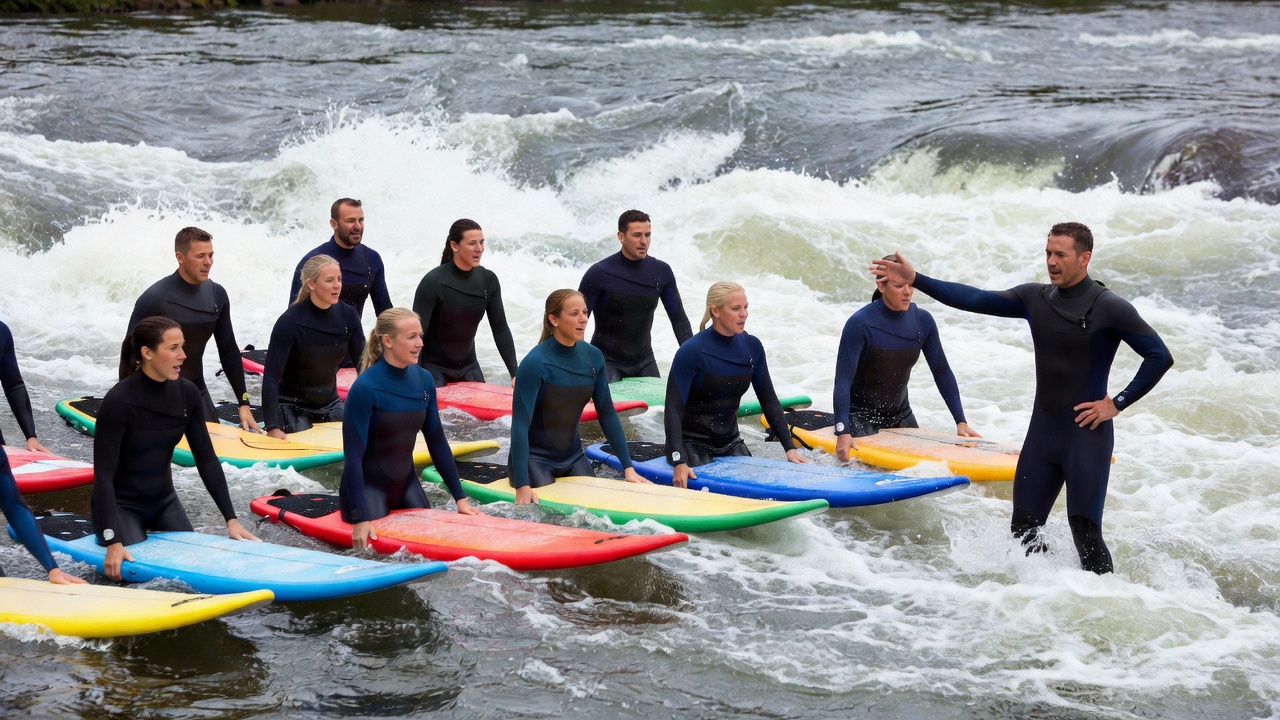
Before you leave home
The single best decision you can make is where you go. Choose a beach with lifeguards on duty and, ideally, a surf school working on it. In the United Kingdom, RNLI lifeguards mark a surfing zone with black-and-white chequered flags and a swimming zone with red-and-yellow flags. In the United States and Australia, look for staffed lifeguard towers and posted signs. Beaches such as Fistral in Newquay, Waikiki in Honolulu, Huntington Beach in California and the southern end of Bondi in Sydney all have long histories of teaching beginners in gentle whitewater.
Check the forecast the evening before. A free forecast site such as Surfline will show wave height, wind and tide. For a first session you want small waves, roughly knee to waist high, and light or offshore wind. If the forecast says overhead waves or strong onshore wind, wait for another day. The ocean will still be there next week.
Pack a wetsuit suited to the water temperature, reef-safe sunscreen, water, a towel and a light snack. Eat a small meal an hour or two before, not a large one right before you paddle.
Twenty minutes on the sand
When you arrive, stand and watch the water for at least ten minutes. Where are the waves breaking? Where are other beginners? Is there a calm, darker channel where waves are not breaking? That could be a rip current, so set up well away from it. Our ocean guide explains exactly what to look for.
Next, warm up. Swing your arms, roll your shoulders, do some gentle lunges and a short jog. Cold muscles strain easily, and paddling uses your shoulders far more than you expect.
Then lay your board on the sand, fins buried or removed, and lie on it. Find the spot where your toes just touch the tail. Practise paddling with long strokes, chest slightly raised. Finally, practise the pop-up, the move from lying to standing, ten times slowly and ten times smoothly. It will feel awkward. That is fine; you are teaching your body a new shape.
The pop-up, slowly
There are many pop-up styles, but most coaches teach beginners a gentle, staged version. Place your hands flat beside your ribs. Push your chest up. Slide your back foot up toward your knee, then step your front foot forward between your hands. Stand with knees bent, feet roughly shoulder-width apart, and look ahead, not down. If one foot keeps landing in the wrong place, simply repeat the drill on the sand until it settles.
Not sure which foot goes forward? Most people who are right-handed stand with the left foot forward, called regular. Left foot back is known as goofy. Try having a friend give you a gentle, unexpected nudge from behind; the foot you step forward with is usually your front foot.